


How to Travel India on a Budget: Stays, Food, Transport & Daily Cost Guide
Learn how to travel across India on a budget with practical tips for affordable stays, local transport, food, trip planning, daily expenses and smarter ways to reduce travel costs.
 13 min read
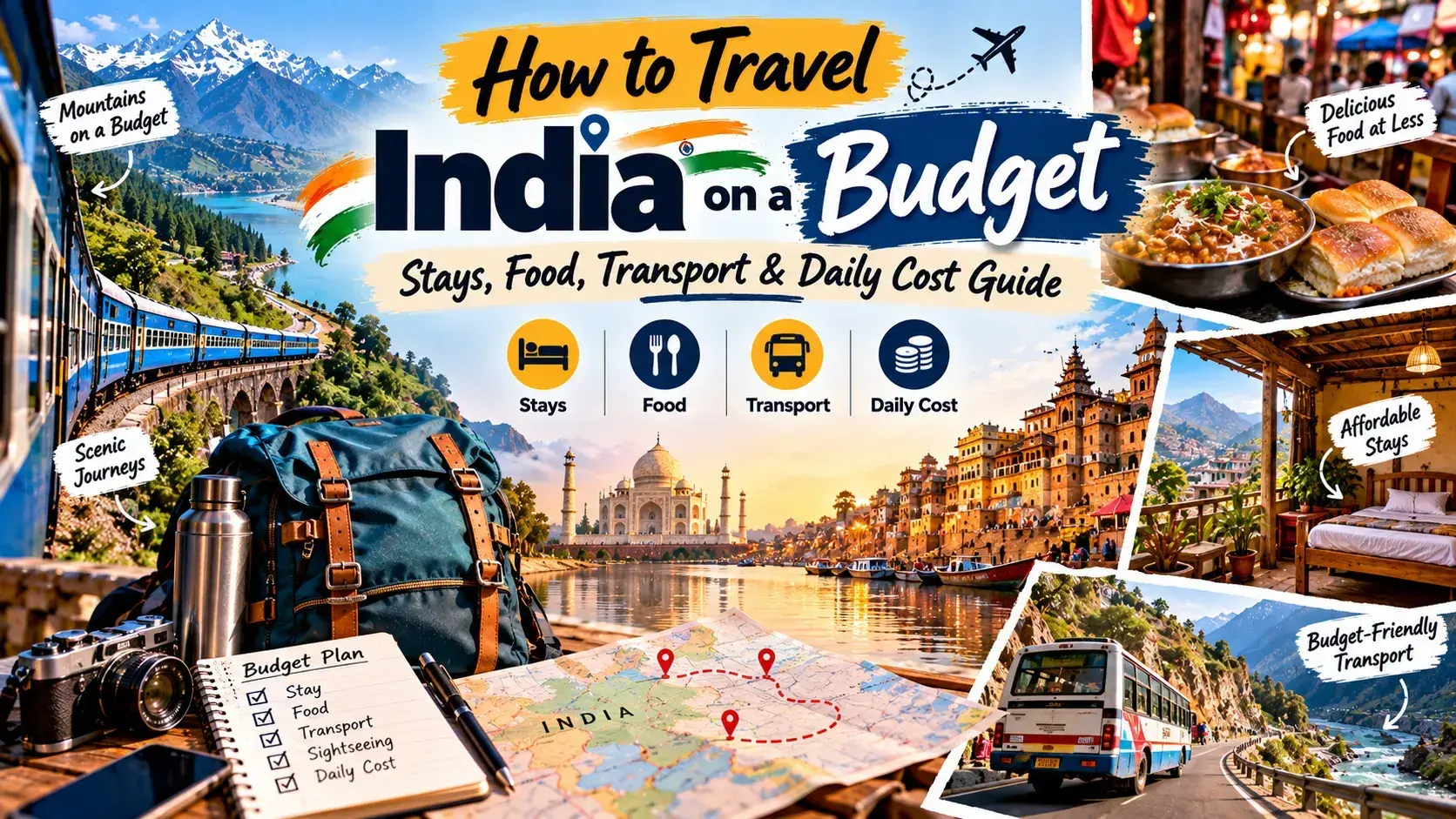
Travelling in India does not have to be expensive. With the right planning, you can reduce major costs such as transport, accommodation and food without turning the trip into an uncomfortable experience. The key is not to choose the cheapest option every time. Smart budget travel means spending less where it makes sense and keeping enough flexibility for comfort, safety and unexpected expenses. Start with a realistic total budget Before booking anything, decide how much you can comfortably spend on the entire trip. Break the budget into:
- Transport
- Accommodation
- Food
- Local travel
- Activities
- Entry tickets
- Shopping
- Emergency buffer
Keeping these categories separate makes it easier to see where your money is actually going.
Captain Tip: Always keep some money outside your planned budget for delays, route changes or unexpected expenses.
Choose the destination according to your budget
Some destinations are naturally more expensive than others because of transport, accommodation demand or activity costs. Before finalising a trip, compare:
- Cost of reaching the destination
- Hotel prices
- Local transport
- Food costs
- Attraction fees
- Seasonal price changes
A cheaper hotel does not always mean a cheaper trip if the property is far from everything and requires expensive local transport every day. Travel during the right season Peak travel periods usually mean higher prices and lower availability. If your schedule is flexible, travelling just before or after the busiest period can sometimes offer:
- Lower hotel prices
- Better transport availability
- Smaller crowds
- More flexible bookings
However, do not choose an off-season period without checking weather and local conditions. Book transport early when it makes sense Transport can become one of the largest expenses in an India trip. Depending on the route, compare:
- Train
- Bus
- Flight
- Shared taxi
- Private cab
- Self-drive vehicle
Booking early can help with popular trains, flights and long-distance buses, especially during holidays and busy travel periods. Do not assume flights are always more expensive or trains are always cheaper. Compare the total journey cost. Compare the complete transport cost The cheapest ticket is not always the cheapest journey. For example, also consider:
- Travel to the station or airport
- Baggage charges
- Local transfer at arrival
- Food during travel
- Overnight accommodation if required
- Parking or tolls for road trips
Captain Tip: Compare door-to-door travel cost, not just the price shown on the booking screen.
Use trains strategically
For many routes in India, trains can be a practical way to reduce travel costs. Overnight trains can sometimes save both daytime travel hours and the cost of one hotel night. However, book according to your comfort requirements rather than selecting a class only because it is cheaper. Use buses for suitable routes Long-distance and state buses can be useful for destinations that are not directly connected by rail. Before booking, check:
- Boarding point
- Drop point
- Travel duration
- Bus type
- Luggage policy
- Arrival time
A very late-night or remote drop location can create additional taxi costs, so include that in your calculation. Save money on flights When flying is necessary, flexibility can help. Compare:
- Different travel dates
- Nearby airports
- Departure times
- Baggage allowance
- Airport transfer cost
Do not book a cheaper flight if hidden extras make the final cost higher. Choose accommodation by value, not just price Budget accommodation can include:
- Hostels
- Guesthouses
- Homestays
- Budget hotels
- Shared apartments
- Group rooms
Before booking, check:
- Location
- Guest reviews
- Safety
- Cleanliness
- Transport access
- Included breakfast
- Cancellation policy
- Taxes and additional charges
A slightly more expensive property in a central location may reduce your overall trip cost. Hostels for solo and youth travellers Hostels can be useful for solo travellers, backpackers and younger groups. Shared rooms can reduce accommodation expenses, and common spaces may also make it easier to meet other travellers. Check locker availability, location and property rules before booking. Homestays and guesthouses Homestays and local guesthouses can provide good value in many destinations. They may also offer more local interaction and simple home-style meals. Compare facilities carefully because standards can vary significantly between properties. Save money on food without eating badly Food can remain affordable in many Indian destinations if you balance restaurant meals with simple local options. Consider:
- Local restaurants
- Thalis
- Breakfast included with accommodation
- Freshly prepared street food from busy outlets
- Local cafés away from major tourist areas
Do not skip meals just to save money during long sightseeing days. Look for local meal options A simple local thali can sometimes provide better value than ordering several individual dishes. Ask your hotel, host or local driver for practical recommendations instead of relying only on places marketed heavily to tourists.
Captain Tip: Busy local restaurants with a high turnover of food are often a better choice than empty places offering unusually cheap meals.
Carry water smartly
A reusable water bottle can reduce repeated purchases where safe refill facilities are available. Always make sure the drinking water source is safe. Hydration should never be reduced just to save a small amount of money. Use local transport where practical Depending on the destination, local travel options may include:
- Metro
- City buses
- Auto-rickshaws
- Shared taxis
- App-based cabs
- Walking
Using public transport for suitable routes can significantly reduce daily expenses. For groups, however, a shared cab or vehicle may sometimes work out cheaper per person. Walk when the route makes sense Walking can save money and often provides a better experience in old cities, market areas and compact tourist zones. But do not choose to walk long or unsafe routes only to reduce costs. Consider weather, distance and surroundings. Split transport costs in a group If you are travelling with friends, transport and accommodation costs can often be shared. A cab that feels expensive for one traveller may become reasonable when divided between four people. The same applies to:
- Private vehicles
- Hotel rooms
- Local guides
- Group activities
Avoid overpacking the itinerary Trying to visit too many cities can make a budget trip more expensive. Every extra destination can add:
- Transport
- Hotel changes
- Local transfers
- Meals on the road
- Luggage handling
- Additional sightseeing costs
A slower trip covering fewer places can often cost less and feel more enjoyable. Set a daily spending limit After paying for major bookings, decide roughly how much you can spend each day. Daily expenses may include:
- Meals
- Local transport
- Tickets
- Snacks
- Small activities
- Personal purchases
You do not have to follow the limit exactly, but having a target helps control unnecessary spending. Keep shopping separate from the trip budget Shopping can quickly make an affordable trip look expensive. Treat souvenirs, clothes and personal purchases as a separate category instead of including them in the essential travel budget. This gives you a more accurate idea of what the trip itself actually cost. Look for free experiences Not every memorable travel experience requires an entry ticket. Depending on the destination, free or low-cost experiences can include:
- Walking through local markets
- Heritage neighbourhoods
- Beaches
- Public viewpoints
- Local festivals
- Street photography
- Parks
- Riverside walks
Balance paid attractions with simpler local experiences. Be careful with very cheap tours A very low package price can sometimes exclude important costs. Before booking, ask what is included:
- Accommodation
- Transport
- Meals
- Sightseeing
- Entry tickets
- Driver charges
- Taxes
- Local transfers
Compare the final expected cost rather than only the advertised starting price. Use a simple expense tracker You do not need complicated software. Keep a basic record of:
- Transport
- Accommodation
- Food
- Activities
- Shopping
- Miscellaneous expenses
This is especially useful when travelling with friends and splitting costs. Keep an emergency fund Never plan to spend every rupee in your account or wallet. Keep a separate amount available for:
- Medical needs
- Unexpected transport
- Additional accommodation
- Missed connections
- Route changes
Captain Tip: An emergency budget is part of good trip planning, not unused money.
Common budget travel mistakes
Avoid:
- Choosing a hotel only because it is cheapest
- Booking non-refundable travel too early
- Ignoring local transport costs
- Travelling too many cities in too few days
- Keeping no emergency fund
- Comparing only headline package prices
- Spending heavily on shopping without tracking it
- Skipping meals to save money
- Booking unsafe options because they are cheaper
Sample daily budget structure Instead of setting one fixed amount for every destination, divide your daily budget by category. For example:
- Accommodation
- Meals
- Local transport
- Sightseeing
- Small personal expense
- Emergency reserve
Actual amounts will depend on the city, season and travel style. Frequently asked questions Is India good for budget travel? Yes. India offers a wide range of transport, accommodation and food options, which allows travellers to adjust trips according to different budgets. What is the biggest expense on most trips? Transport and accommodation are often the largest expenses, although this depends on the destination and travel style. Are hostels always the cheapest option? Not always. For couples, families or groups, sharing a budget hotel room may sometimes cost less per person than individual hostel beds. Is travelling in a group cheaper? It can be. Shared transport, rooms and activities may reduce the per-person cost, but group trips also require better coordination. Should I book everything in advance? Not necessarily. Important transport and high-demand accommodation may benefit from advance booking, while keeping some flexibility can be useful for other parts of the trip. Final thoughts Budget travel is not about making every part of the trip as cheap as possible. It is about understanding where your money goes, comparing the real cost of different options and spending more only where it improves the trip meaningfully. Choose fewer destinations, keep your itinerary realistic, track expenses and always maintain an emergency buffer. If you are planning an affordable trip with friends, family, students or a private group, QurikVoy can help organise the route, accommodation, transport and overall itinerary according to your budget.



 QURIKVOY TRAVEL DISPATCH