


Spiti Valley Trip Guide: Route, Best Time, Budget, Stay & Packing Tips
Plan your Spiti Valley trip with practical information on routes, best travel season, accommodation, budget, packing, road conditions and essential tips for exploring the high-altitude Himalayan region.
 10 min read
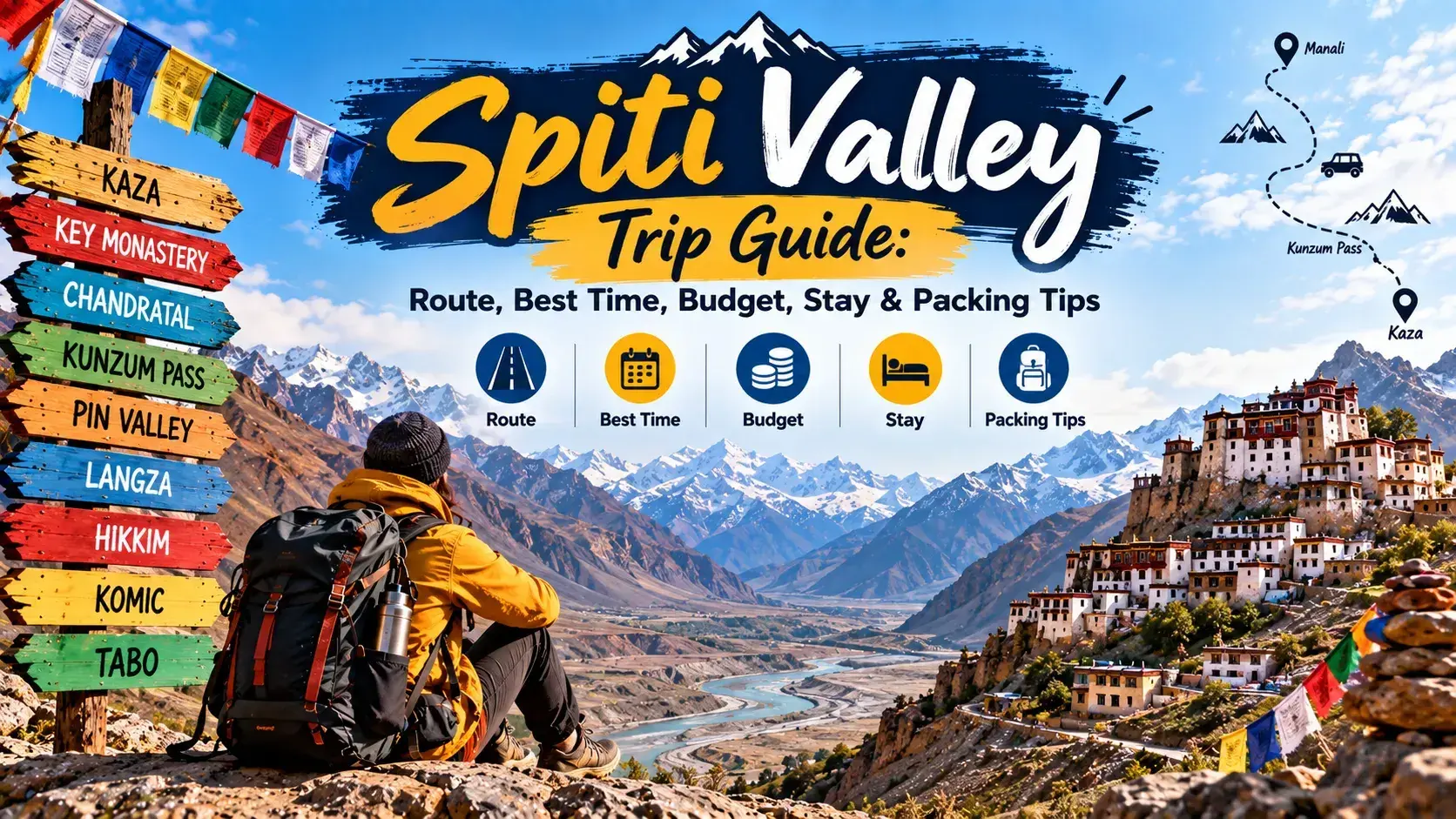
Spiti Valley is one of the most dramatic high-altitude regions in Himachal Pradesh, known for barren mountain landscapes, remote villages, monasteries, winding roads and a completely different side of the Himalayas. A Spiti trip needs more planning than a regular hill-station holiday. Long driving hours, changing road conditions, high altitude, limited facilities and unpredictable weather can all affect the itinerary. This guide covers the practical information you should consider before planning a Spiti Valley trip. Where is Spiti Valley? Spiti Valley is located in the high-altitude Himalayan region of Himachal Pradesh. The valley is known for destinations such as Kaza, Key Monastery, Kibber, Langza, Hikkim, Komic, Tabo and Dhankar. Kaza is commonly used as a central base for exploring many of the surrounding villages and attractions. Main routes to Spiti Valley Travellers commonly approach Spiti from two directions. The first route is through Shimla and Kinnaur. A typical route can include:
- Shimla
- Narkanda
- Rampur
- Kalpa or Reckong Peo
- Nako
- Tabo
- Kaza
The second approach is through Manali. Depending on current seasonal road conditions, travellers may continue from Manali towards the Spiti region through the high mountain route.
Captain Tip: Do not assume both routes will always be open. High-altitude roads can be seasonal, so check current road conditions before finalising the itinerary.
Which Spiti route is better? The best route depends on your travel dates, available days and road conditions. The Shimla-Kinnaur side usually allows travellers to gain altitude more gradually, which can make the journey more comfortable for some people. The Manali side can provide a different landscape and road-trip experience, but high-altitude conditions should be taken seriously. For a longer trip, travellers may consider entering from one side and exiting from the other when roads and local conditions allow. How many days do you need for Spiti? Avoid planning Spiti as an extremely rushed trip. A longer itinerary gives you more flexibility for mountain roads, sightseeing and acclimatisation. Depending on the route and starting city, a practical Spiti itinerary may require around a week or more. Your final duration should account for:
- Long road journeys
- Acclimatisation
- Weather delays
- Village exploration
- Rest time
- Buffer days
Captain Tip: In Spiti, one extra buffer day is usually more useful than adding one extra sightseeing stop.
Suggested Spiti Valley itinerary
A sample trip structure can look like this:
- Day 1: Begin the journey towards Shimla or the Kinnaur region
- Day 2: Continue through Kinnaur
- Day 3: Travel towards Nako and Tabo
- Day 4: Explore Tabo and continue to Kaza
- Day 5: Explore villages around Kaza
- Day 6: Visit Key Monastery, Kibber and nearby areas
- Day 7: Explore additional villages or local attractions
- Day 8: Begin the return journey
This is only a planning framework. Actual routes should be adjusted according to road conditions, travel season and your starting point. Kaza Kaza is one of the main bases for travellers exploring Spiti Valley. It offers accommodation, cafés, basic shopping facilities and access to several surrounding villages and monasteries. Staying in Kaza for more than one night can make sightseeing more relaxed. Key Monastery Key Monastery is one of the most recognisable landmarks in the Spiti region. Its location against the mountain landscape makes it a popular stop for travellers interested in culture, photography and Himalayan architecture. Visit respectfully and follow any instructions given at the monastery. Kibber Kibber is a high-altitude village near Kaza and is commonly included in local sightseeing routes. The journey itself provides impressive views of the surrounding mountains and valley. Langza Langza is known for its open mountain landscape and distinctive village setting. It is often included with nearby high-altitude villages as part of a day trip from Kaza. Hikkim and Komic Hikkim and Komic are commonly included in Spiti village circuits. Because these places are located at high altitude, avoid rushing between stops and pay attention to how your body responds. Tabo Tabo is known for its monastery and cultural importance. It also works well as an overnight halt on the route between Kinnaur and Kaza. Dhankar Dhankar is another important heritage and landscape stop in the Spiti region. The village and monastery area offers dramatic views of the surrounding mountains and valleys. Best time to visit Spiti Valley The ideal travel period depends heavily on the route you plan to use. Road accessibility, weather and local conditions vary significantly through the year. Before travelling, check:
- Current road status
- Weather forecasts
- Local advisories
- Accommodation availability
- Transport conditions
Do not rely on a previous year's road-opening dates when planning your trip. High altitude and acclimatisation Spiti is a high-altitude destination, so travellers should take acclimatisation seriously. Avoid trying to cover large altitude gains too quickly. Common practical steps include:
- Keep the first few days relatively relaxed
- Stay properly hydrated
- Avoid excessive physical exertion immediately after arrival
- Eat regular meals
- Rest properly
- Pay attention to unusual symptoms
Anyone with an existing medical condition should consider speaking with a qualified healthcare professional before planning high-altitude travel.
Captain Tip: A packed itinerary is not worth it if your body is struggling with altitude. Slow down when needed.
Where to stay in Spiti
Accommodation options vary by destination and season. Travellers may find:
- Hotels
- Guesthouses
- Homestays
- Small local properties
- Basic mountain accommodation
Homestays can offer a more local experience, while hotels may provide more predictable facilities. During busy travel periods, advance booking can be useful. Spiti trip budget The total budget depends on your starting city, number of travellers, transport type, accommodation and trip duration. Major expenses typically include:
- Transport
- Fuel
- Accommodation
- Meals
- Local sightseeing
- Driver charges if applicable
- Personal expenses
Travelling in a group can reduce some shared transport costs. Instead of looking only for the cheapest option, compare the number of travel days, vehicle type, accommodation standard and inclusions. Self-drive or hired vehicle? Spiti is a road-trip destination, but the driving conditions can be very different from normal city or highway driving. Self-drive travellers should be comfortable with mountain roads and changing conditions. A hired vehicle with an experienced mountain driver can make the journey easier for travellers who do not want the responsibility of driving throughout the trip. Choose according to your experience, budget and group size. What to pack for Spiti Valley Weather in Spiti can change quickly, so layered clothing is more useful than relying on a single heavy jacket. Recommended items include:
- Warm base layers
- Fleece or warm mid-layer
- Insulated jacket
- Wind-resistant outer layer
- Comfortable shoes
- Extra socks
- Sunglasses
- Sunscreen
- Lip balm
- Cap or warm head covering
- Reusable water bottle
- Power bank
- Personal medicines
- Basic first-aid supplies
- Government-issued ID
- Small day backpack
Captain Tip: Keep one warm layer, water and sun protection accessible during road journeys instead of packing everything deep inside your luggage.
Mobile network and connectivity
Connectivity can be inconsistent in remote Himalayan areas. Do not depend entirely on mobile internet for navigation, bookings or communication. Before entering remote sections:
- Save important booking details offline
- Keep hotel contact numbers
- Download relevant maps
- Inform family about your approximate itinerary
- Carry a charged power bank
Cash and payments Digital payments may not always be dependable in remote areas. Carry some cash as backup for food, small shops, local services or unexpected situations. Do not rely entirely on finding an ATM whenever needed. Food and water Mountain travel can affect appetite, but regular meals and hydration remain important. Choose freshly prepared food where possible and carry drinking water during long road sections. Avoid overloading yourself with heavy meals during difficult high-altitude travel days. Responsible travel in Spiti Spiti's remote environment is part of what makes the region special. Travellers should minimise their impact.
- Do not leave plastic waste behind
- Respect monasteries and local customs
- Avoid disturbing village life
- Use refillable water bottles when practical
- Follow local photography restrictions
- Do not damage natural or cultural sites
Common Spiti planning mistakes Some mistakes can make the trip unnecessarily difficult. Avoid:
- Planning too many kilometres every day
- Ignoring acclimatisation
- Travelling without checking road conditions
- Packing only for daytime temperatures
- Depending completely on mobile internet
- Keeping no buffer time
- Assuming fuel and cash will always be easily available
- Choosing an itinerary only because it looks cheaper
Frequently asked questions Is Spiti Valley suitable for first-time Himalayan travellers? Yes, but it requires more planning than a typical hill-station trip. Long road journeys, high altitude and limited facilities should be considered before travelling. How many days are enough for Spiti Valley? The ideal duration depends on your starting city and route, but a slower multi-day itinerary is generally more comfortable than trying to cover Spiti in only a few days. Is Spiti suitable for a road trip? Yes. Road travel is a major part of the Spiti experience, but road and weather conditions should always be checked before departure. Can families visit Spiti? Many families travel to Spiti, but the itinerary should be planned according to age, health, altitude tolerance and comfort with long road journeys. Should accommodation be booked in advance? Advance booking is useful during popular travel periods, particularly if you want specific hotels or homestays. Final thoughts Spiti Valley rewards travellers who are willing to slow down. The landscapes are spectacular, but a good trip is not about covering every village in the shortest possible time. Allow enough days for mountain roads, altitude adjustment, local experiences and unexpected delays. Plan conservatively, keep your itinerary flexible and check current road and weather information before travelling. If you are planning a Spiti Valley trip with friends, family or a private group, QurikVoy can help organise your route, transport, accommodation and complete itinerary.
Trips for this guide
Ready to go? These Qurikvoy trips cover the places in this guide — open one for the itinerary, inclusions and dates.



 QURIKVOY TRAVEL DISPATCH